
How to Choose the Perfect Handbag for Your Body Type
You can spend an afternoon hunting for the right handbag and still come home with something that looks better on the shelf than on your shoulder. The problem is rarely the bag. It is proportion.
Bags behave a lot like shoes: size, shape and placement change how the rest of you reads. Get those three things right and a plain leather tote looks deliberate. Get them wrong and even a beautiful bag can look borrowed from someone else. Here is how to think it through before you pay.
Start With Proportion, Not the Trend
Stand in front of a full-length mirror in the outfit you wear most often, not the one you save for occasions. Three things matter: your height, the length of your torso, and the relationship between your shoulders and hips. Where the bag sits against that frame decides everything else.
Petite frames
A bag that swings past your hip adds length you do not have. Keep the body of the bag between your waist and upper hip, and choose a strap that holds it there. Small to medium structured shapes read cleanest. If you love big bags, look for vertical proportions, taller than wide, rather than a broad shape that spreads sideways across your body.
Tall frames
You can carry scale. Slouchy hobos, large totes and long crossbody straps all work because there is room for them to hang. The risk is the opposite one: a tiny bag can look like an afterthought. If you want a mini, wear it with a shortened strap high on the body so it reads as deliberate rather than lost.
Curvier frames and full busts
Avoid bags that land exactly at your fullest point, whether that is the bust, the waist or the widest part of the hip. Move the bag above or below it. A crossbody strap cutting straight across a full bust is busy; a longer single-shoulder strap or a top-handle carried in the hand keeps the line cleaner.
Where the Bag Rests Changes Everything
This is the part most shoppers skip. Two bags of the same size can flatter you completely differently depending on the height they hang at.
Hips wider than shoulders
Draw the eye upward. A short-strapped shoulder bag or a top-handle held high adds visual weight near the shoulder, which balances the lower body. Skip anything that swings at the widest part of your thigh.
Fuller midsection
A crossbody that rests on the waist draws attention straight to it. Shorten the strap so the bag sits under the bust, or lengthen it so it lands at hip level. Structured shapes with a defined outline generally work better here than soft, unstructured ones that collapse against the body.
Balanced hourglass
Proportion tends to take care of itself, which means most shapes will work. Decide deliberately: place the bag at your waist to emphasise it, or just above or below to let your silhouette do the talking.
Straight or rectangular frames
You can create curves with curves. Rounded shapes such as crescents, hobos and half-moon bags add softness and movement. Sharp, boxy styles can look severe unless you are deliberately going for a graphic, architectural outfit.
Strap Length Is the Detail People Ignore
Strap drop, the distance from the top of the strap to the top of the bag, decides where the bag hangs and how it feels by hour three of your day.
- Top handle: carried in the hand or the crook of the arm, sitting high. Polished and formal, but not hands-free.
- Short shoulder: tucks under the arm and lands around the waist or ribs. Good for adding weight near the shoulder.
- Long shoulder or crossbody: hands-free, landing at the hip or upper thigh. Check that the strap is adjustable, because a few centimetres change the whole effect.
- Clutch or wristlet: keeps the body line uninterrupted for evening, at the cost of carrying capacity.
If you find one bag you love but the strap drop is wrong, a good cobbler can often shorten a strap or add holes. That small alteration is frequently the difference between a bag you use weekly and one that sits in the wardrobe.
Scale, Hardware and Colour
Hardware has a scale of its own. Delicate chains and slim clasps can disappear on a tall, broad frame, while oversized buckles and heavy rings can overwhelm a small one. Match the metal to your overall bone structure rather than to the outfit.
Colour works as a placement tool. A bag close in tone to your outfit blends in, which keeps the eye moving vertically and makes you look taller. A contrasting bag creates a focal point exactly where it sits, so choose that spot on purpose: near the shoulder to lift attention, at the hip to ground it.
Build a Rotation Instead of Chasing One Perfect Bag
No single bag does everything, and trying to find one that does usually ends in compromise. Four pieces cover almost every situation:
- An everyday bag sized for your actual daily contents, not your imagined ones.
- A hands-free crossbody for errands, travel and anything involving two free hands.
- One evening piece, small and structured, that works with the dresses you really wear.
- One bag in a colour or texture you enjoy, purely for the pleasure of it.
The Two-Minute Fitting Test
Before you buy, empty your current bag onto the counter and put those items, plus a water bottle and anything seasonal, into the one you are considering. Close it. Walk twenty steps and sit down. Check that the strap does not slide, that the bag does not knock against your hip, and that you can reach your phone without unpacking everything. Then step back three feet from the mirror and look at the whole picture, not the bag.
If it passes all of that and the placement flatters you, it is the right one. Buy it, use it hard, and stop second-guessing.
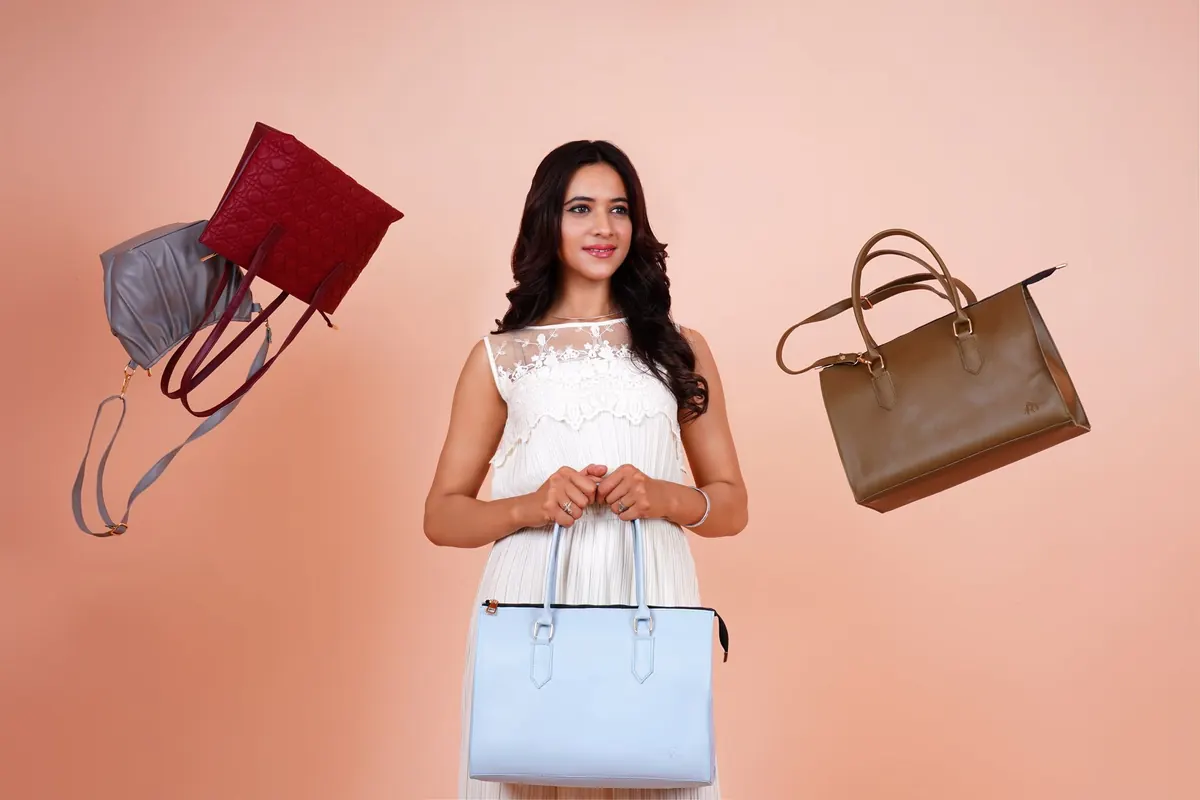
Photo: Muneeb Malhotra / Pexels